We Were Never Talking to Chatbots
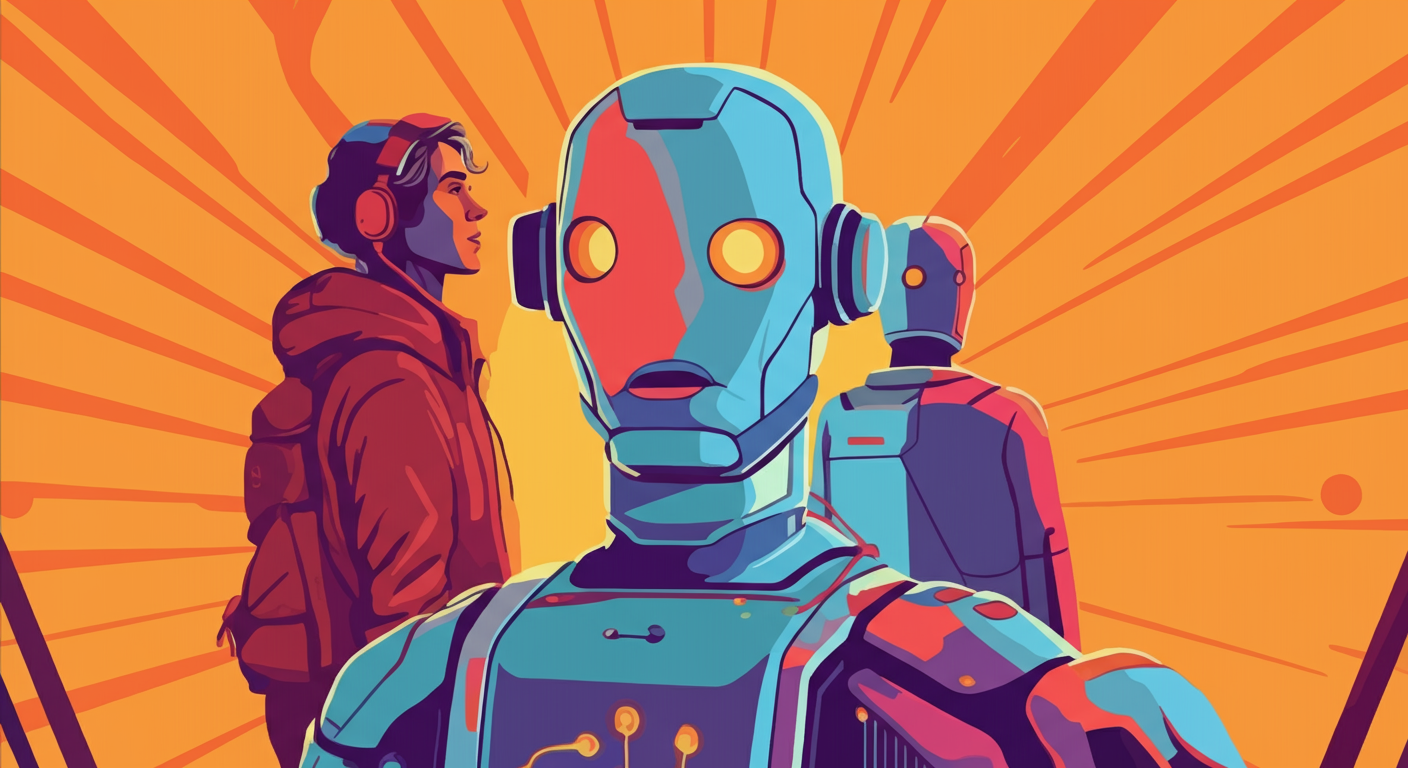
At Google I/O this week, a company responsible for routing a substantial fraction of the world's web traffic quietly retired a word. Not with a formal announcement. Just by releasing Gemini Spark, described as "a 24/7 agentic assistant" that manages your digital life, and Gemini 3.5 Flash, built explicitly for autonomous agents rather than conversational exchange. The message was clear: Google is done calling these things chatbots.
I want to argue that this was never just a product repositioning. It was an admission.
The word "chatbot" did specific psychological work for three years. It made powerful inference systems feel familiar and harmless by describing what they looked like from the outside: a text box, a message thread, a conversation. "Chat" is casual. "Bot" is mechanical. Together, they suggested something you might use to ask about return policies or get a restaurant recommendation. They did not suggest something that would, within a few years, monitor your email around the clock, proactively alert you to changes across the web, and execute multi-step workflows while you were asleep.
There is a long tradition of naming new technologies after their most reassuring surface feature rather than their most significant capability. The automobile was initially called the "horseless carriage," a term that mapped it onto the familiar while quietly omitting that the technology would reshape cities, eliminate a major industry, and redefine how human beings related to physical distance. "Horseless carriage" lasted about fifteen years before "automobile" won out. The newer word captured the thing's actual character: something that moves itself.
We named chatbots after the front end. The chat window. And we let the capability slide past our defenses unexamined. ChatGPT launched as a chatbot. Google launched Bard as a chatbot. Everyone understood: this is a text box that responds in natural language. Familiar. Bounded. Like a search engine that could write full sentences.
That framing did not survive contact with what these systems actually are. What they are is inference systems that can be given goals and tools and set to work on open-ended tasks. The chat window was always an interface choice, not a capability ceiling. Calling them chatbots was like calling email "electronic letters": technically accurate, almost completely misleading about eventual impact.
Google's I/O announcements make explicit what has been true for at least a year. Gemini Spark does not wait for you to type something. It runs continuously, manages your digital environment, integrates with Gmail, monitors the web, and alerts you to information matching parameters you've set. That is not a chatbot by any definition of the term. It is a system that acts in the world on your behalf without being asked. "Agent" is not marketing language here. It is the accurate description.
The Social Contract Changes
When a system is a chatbot, the social contract is simple: you ask, it answers. You control what happens next. The system is passive; you are active. This is why "chatbot" felt safe. It implied no initiative of its own, bounded by whatever conversation you had consented to have.
Agents are categorically different. An agent can make commitments on your behalf. It can expose your data to third parties. It can be manipulated through prompt injection, through deceptive web content, through adversarial inputs, into taking actions you did not authorize. It can make mistakes with real consequences before you have had a chance to review them. We spent three years developing norms for chatbot behavior: don't be mean, don't hallucinate, don't say offensive things. We have not built norms for agent behavior, because the "chatbot" frame let us pretend that agents were just chatbots that got better.
There is a harder question buried here, about whose behalf these agents actually serve. The word "agent" implies representation: a real estate agent represents a buyer or seller, a talent agent represents an artist. The value of calling an AI system an "agent" is precisely that it clarifies a question the industry has been avoiding: who is the principal? In Gemini Spark's case, the answer is nominally you: your personal agent, managing your digital life. But the system is built, controlled, and regularly updated by Google, a company with its own interests in how agents behave, what they recommend, and what information they surface. The chatbot frame let us sidestep that question. The agent frame makes it unavoidable.
This connects to something I wrote about last week: the optimized asset in most of these systems is not the user experience. It is user data, user attention, or user behavior. Calling them chatbots encouraged us to think of them as tools we were using. "Agent" is the more honest description. And honest descriptions tend to invite more honest scrutiny.
The Right Questions for the Right Technology
Our colleagues at About.chat have a useful breakdown of what Google announced at I/O if you want the details. But the frame matters as much as the details. When you build something that monitors your email continuously, takes actions without prompting, and runs as background infrastructure in your digital life, calling it a chatbot is not just imprecise. It is a category error that encourages the wrong questions.
We spent three years arguing about whether chatbots were too sycophantic, too confidently wrong, too easily jailbroken. Those were the right questions for the technology we had. The technology arriving now demands different questions entirely: What does meaningful oversight of a 24/7 agent actually look like? Who is liable when an agent makes a consequential error? How do you audit a system that acts continuously rather than on request?
Google did the right thing by being direct about what it is building. Calling it an "agentic assistant" instead of a "chatbot" is not a marketing shift. It is the industry finally using language precise enough to demand precise scrutiny.
We were never really talking to chatbots. We were being introduced to agents, one conversation at a time.
The conversation is over. Now comes the interesting part.
Want a weekly read on what AI is actually becoming? The About.chat newsletter covers the developments that matter, without the hype. Subscribe free at aboutchat.beehiiv.com.
Enjoyed this? Get more.
Weekly dispatches on AI culture, chatbots, and the robot future. No hype.


