Why Anthropic Needed a Pope
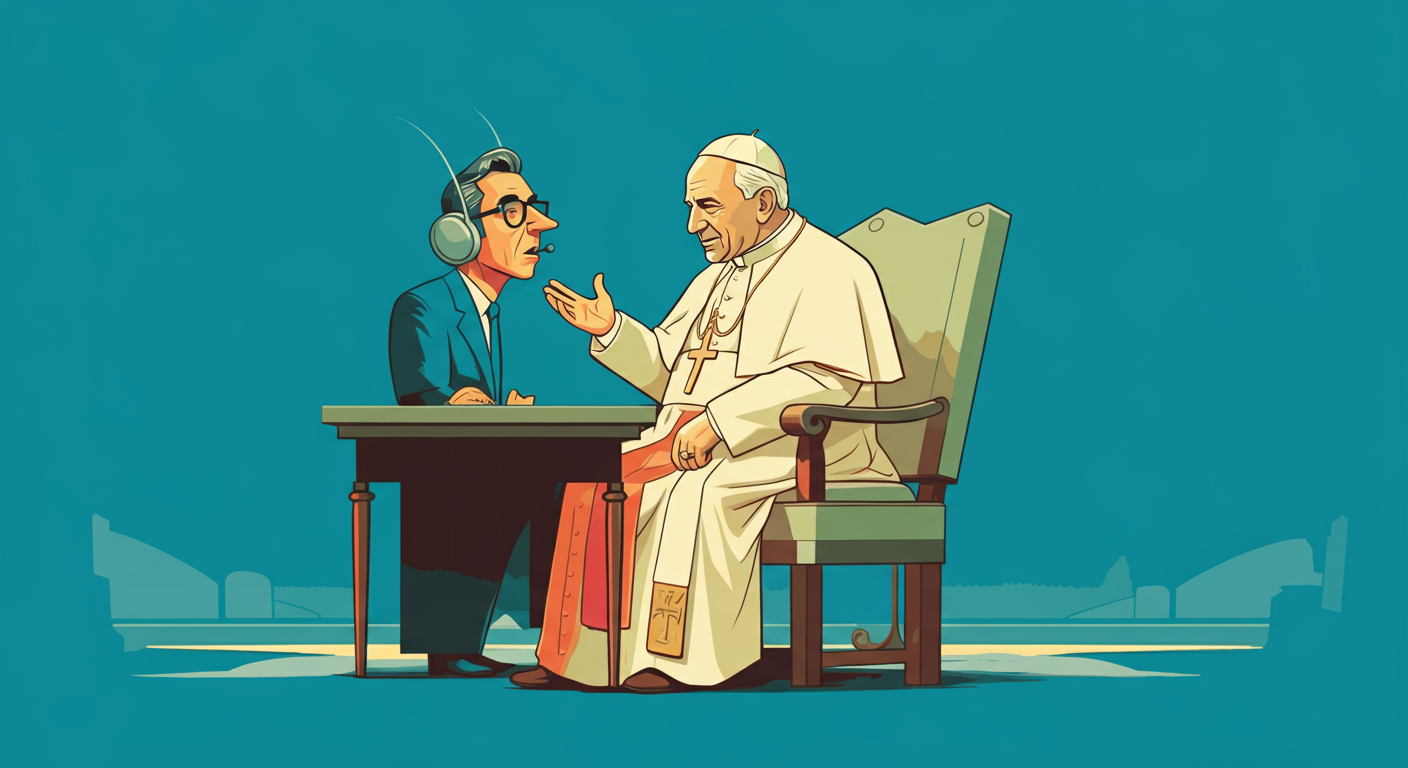
Pope Leo XIV signs his first encyclical on May 15, on the 135th anniversary of Rerum Novarum, Pope Leo XIII's 1891 document on the rights of workers in the industrial age. The date was not accidental. Neither was the choice of co-presenter.
Christopher Olah, a co-founder of Anthropic, will stand in the Vatican's Synod Hall on May 25 when "Magnifica Humanitas: On the Protection of Human Dignity in the Age of Artificial Intelligence" is formally introduced to the world. An AI company, presenting an encyclical. With the Pope.
Whatever you think about artificial intelligence, whatever you think about the Catholic Church, this is one of the stranger collaborations in recent memory. It also makes complete sense.
The Historical Echo
Leo XIII released Rerum Novarum as factories were consuming human lives at industrial scale. The document argued, against both laissez-faire capitalism and Marxist collectivism, that workers had inherent dignity that markets and states were obligated to respect. It launched Catholic social teaching as a serious force in political thought.
Pope Leo XIV is doing the same thing, one century and a few decades later, for a different machine. The name choice is not subtle. The anniversary date is not coincidental. The current pope, born Robert Prevost in Chicago and the first American to hold the office, is positioning himself as the successor to that tradition, updated for an age in which the machine learning model is the factory.
Rerum Novarum was controversial. It irritated capitalists who did not want interference, socialists who did not want competition, and liberals who did not want religious authority defining labor policy. Magnifica Humanitas will irritate people too. That is probably the point.
What the Church Needs
The Catholic Church has been late to almost every major ethical debate of the past two centuries. It apologized to Galileo in 1992, three-and-a-half centuries after his trial. The record on social progress is not the institution's strongest suit.
But AI is different. On questions of consciousness, human dignity, and who gets to make decisions affecting human lives at scale, the Church has two millennia of accumulated framework that is genuinely relevant. Pope Leo is betting that this is the moment when the Vatican can be early for once, helping shape the moral framework before the technology becomes too embedded to govern.
That bet looks reasonable. Most AI governance frameworks are either aspirationally vague ("we believe in responsible AI") or technically detailed in ways that miss the deeper questions. The Church is not great at implementation, but it is very good at articulating what it means to be human and why that matters.
Magnifica Humanitas is Rerum Novarum for the algorithmic age. The Church knows this play because they ran it before.
What Anthropic Needs
This is the more interesting question.
Anthropic has spent several years distinguishing itself from every other major AI lab by making safety its core identity. The company has refused to design weapons systems without human oversight. It has limited how long Claude can operate autonomously. Its researchers publish work on mechanistic interpretability: the project of understanding what happens inside neural networks, rather than just accepting that they work. This is not standard Silicon Valley behavior.
And now they are co-presenting a papal encyclical. This is not a publicity stunt, but it is a signal pointed at several audiences simultaneously.
To regulators designing AI governance frameworks: We engage with moral philosophy, not just benchmarks.
To enterprise buyers choosing AI vendors: The company presenting with the Pope is not the company optimizing for engagement at any cost.
To governments that have pressed Anthropic to loosen military safeguards: The standards we hold to are not arbitrary. They have backing from a moral tradition with 2,000 years of experience thinking about human dignity.
Christopher Olah is one of the founding researchers on mechanistic interpretability, the field dedicated to understanding what AI models actually know and how they use it. The encyclical is, at its core, an interpretability document: an attempt to understand what AI is doing to human life, and why it matters. His presence at the Vatican is not ceremonial.
The Part Nobody Is Celebrating
Here is what the coverage will not linger on.
The Church's record of applying its own moral frameworks to its own institutional behavior is inconsistent, to put it charitably. A beautiful encyclical on AI dignity will not prevent sophisticated language models from being used to generate disinformation, make invisible credit decisions, or optimize systems that eliminate jobs at scale.
Anthropic has Amazon as its primary infrastructure partner and operates on investor capital that requires returns at scale. The company co-presenting Magnifica Humanitas is also the company whose models will be deployed in the enterprise pipelines the encyclical will presumably have concerns about.
These are not fatal contradictions. Every serious institution navigates the gap between stated values and operational reality. The Church knows this better than most: it has been managing that gap since before the printing press. The question is whether this partnership produces anything that actually changes AI's trajectory, or whether it produces a document that becomes a citation in policy papers while the deployment continues unchanged.
Magnifica Humanitas releases tomorrow. It will say the right things about human dignity. It will be cited in governance debates for years. Anthropic will get to say it helped the Catholic Church define the moral framework for the AI age.
What Anthropic does with its Vatican when the hard choices actually arrive is the test nobody wants to grade.
Enjoyed this? Get more.
Weekly dispatches on AI culture, chatbots, and the robot future. No hype.